Drowning in Dashboards: Why More Data Visibility Is Not the Same as Better Business Understanding
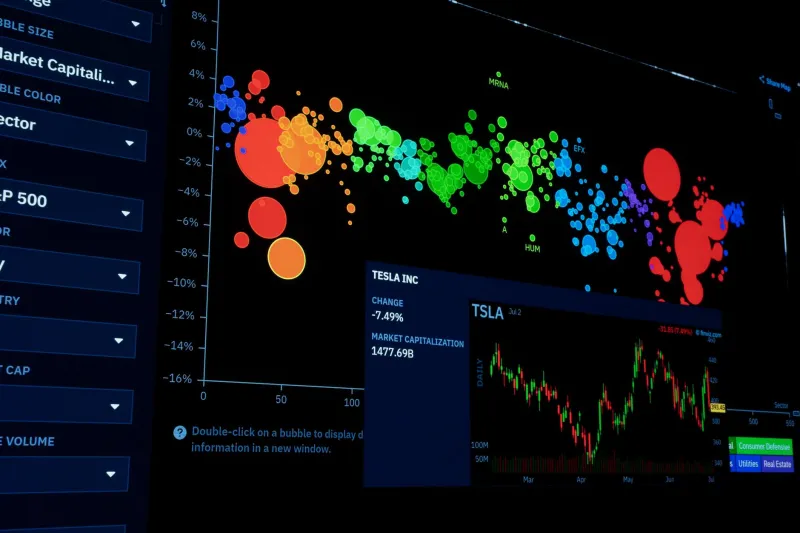
Let me offer a scenario that will be familiar to most enterprise leaders: your organization has invested significantly in data infrastructure over the past several years. You have a data lake, possibly more than one. You have a business intelligence platform with dozens of dashboards. You have real-time reporting on operational metrics, customer behavior, financial performance, and supply chain status. Your data team is larger than it has ever been.
And yet, when a significant business question arises—why is customer retention declining in the Midwest region, or what is driving the margin compression in a specific product line—the answer does not emerge from the infrastructure you have built. It emerges from a weeks-long analytical effort that feels, each time, like the first time your organization has attempted to answer a question like this.
This is the data trap. And it is costing enterprises not just in analytical inefficiency, but in the quality of the strategic decisions that depend on genuine understanding.
The Visibility Fallacy
The dominant assumption in enterprise data strategy for the past decade has been that the primary problem is visibility. If we can see more data, more clearly, more quickly, we will make better decisions. This assumption has driven enormous investment in data warehousing, visualization tools, self-service analytics platforms, and most recently, AI-assisted reporting capabilities.
The assumption is not entirely wrong. Visibility is a necessary condition for understanding. But it is not a sufficient one—and the enterprise technology industry has had strong commercial incentives to blur that distinction.
The result is that many organizations have achieved extraordinary visibility into metrics that do not actually correspond to the questions their leadership teams are trying to answer. They can tell you, with impressive precision, how many customer interactions occurred across how many channels in the last thirty days. They struggle to tell you whether those interactions are producing the customer relationships that drive long-term enterprise value.
The dashboards are full. The insight is scarce.
Why More Layers Make the Problem Worse
The reflexive response to data frustration in most enterprises is to add capability. A new analytics tool. A more sophisticated visualization layer. A machine learning model that promises to surface insights automatically. Each addition is defensible in isolation. Cumulatively, they deepen the problem.
Here is why: every additional analytics layer creates new data outputs that require interpretation. Interpretation requires context. Context requires shared understanding of what the data represents, how it was collected, what its limitations are, and what business question it is intended to answer. In organizations that have not built that shared understanding at the foundational level, adding layers does not create clarity—it creates competing versions of reality.
I have seen enterprises where the finance team, the commercial team, and the operations team are each reporting different numbers for the same metric because each team's analytics environment applies different definitions, different time horizons, and different exclusion criteria. The technology is working exactly as designed. The organization is no closer to a shared understanding of its own performance.
The Architecture Question Nobody Wants to Ask
The harder conversation—the one that most enterprise data strategies defer or avoid—is not about technology. It is about architecture in the deeper sense: what questions does this organization actually need to answer, and are our data assets genuinely designed to answer them?
This question is harder than it appears because it requires enterprise leaders to articulate, with real specificity, what they mean by understanding. Not what metrics they want to track, but what decisions those metrics are intended to inform, and what level of confidence in those metrics is required before a decision can be made.
In our experience working with enterprises across industries, this level of specificity is rare. Data strategies are more commonly built around capability—what the technology can do—than around demand: what the business actually needs to know, and when, and with what precision.
The consequence is a data architecture that is impressively comprehensive and strategically undirected. It can answer many questions that nobody is asking while struggling to answer the questions that matter most.
Discipline Over Accumulation
The counterintuitive prescription here is restraint. Not in the sense of reducing investment in data capability—for most enterprises, the foundational infrastructure investment is necessary and appropriate. But restraint in what gets measured, reported, and elevated to leadership attention.
High-performing enterprises in the data maturity conversation share a common discipline: they have made explicit choices about which metrics are decision-relevant and which are informational. Decision-relevant metrics are the ones that, when they move, require a leadership response. They are defined with precision, owned by specific individuals, and reported in a cadence that matches the decision cycle they are designed to inform.
Informational metrics serve a different purpose—they provide context, support deeper analysis, and enable teams to diagnose issues when decision-relevant metrics signal a problem. They are available, but they do not compete for leadership attention in the same way.
This distinction sounds simple. In practice, it requires a level of organizational discipline that most enterprises find genuinely difficult, because there are always stakeholders who believe their preferred metric deserves decision-relevant status. The discipline to say no—to curate rather than accumulate—is a leadership capability, not a technology feature.
Insight Interpretation as a Core Competency
There is one more dimension of this problem that deserves direct attention: even when enterprises have the right data, organized in the right way, they frequently lack the organizational capability to interpret it well.
Data literacy—the ability to read a chart, understand what a metric actually measures, recognize the difference between correlation and causation, and translate a quantitative finding into a business implication—is unevenly distributed in most organizations. It tends to be concentrated in analytical functions and underrepresented in the operational and commercial functions where most decisions are actually made.
This creates a recurring dynamic: analytical teams produce rigorous work that is misread, oversimplified, or ignored by the decision-makers it was designed to serve. The solution is not better visualization, though clearer presentation helps at the margin. The solution is investment in data literacy as an enterprise-wide capability—not a technical skill, but a leadership skill.
A Different Standard for Transformation Success
The enterprises that are genuinely winning in the data dimension of digital transformation are not the ones with the most sophisticated technology stacks. They are the ones that have answered the harder questions first: what do we need to understand, why does it matter, and how will we know when we understand it well enough to act?
Those questions are not answered by adding another analytics layer. They are answered by the kind of strategic discipline that has always separated genuinely excellent enterprises from merely well-resourced ones. The data transformation challenge, at its core, is not a technology problem. It is an organizational clarity problem—and that is precisely the kind of problem that deserves to be treated as a first-order strategic priority.