One Vendor Away from Standstill: Rethinking Procurement's Appetite for Consolidation
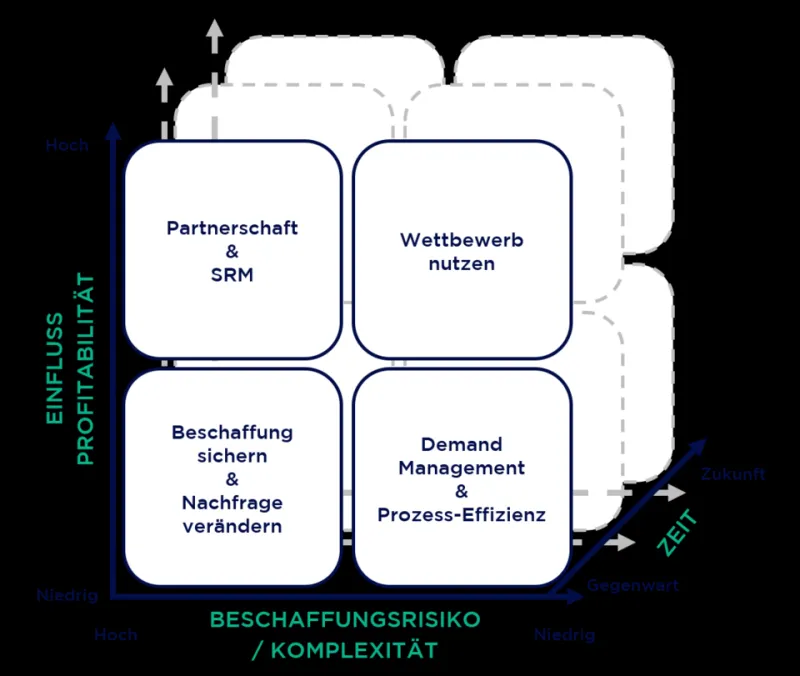
Photo: OCM Management Consultants, CC BY-SA 4.0, via Wikimedia Commons
Procurement's case for consolidation is coherent, well documented, and largely correct on its own terms. Fewer suppliers mean better unit pricing, lower administrative overhead, simpler contract management, and more credible negotiating leverage. Category managers who deliver double-digit savings through rationalization are rewarded accordingly, and they should be.
The difficulty is that this logic optimizes for a single variable — price — while the risk it creates is correlated across the entire supply base. A consolidation program that reduces twenty vendors to three has not merely lowered cost. It has converted twenty independent failure points into three shared ones, and it has done so at precisely the moment when interdependency across systems and regions is rising.
Leverage Is a Position, Not a Capability
Executives often describe supplier concentration as a strategic advantage. It is more accurate to describe it as a position: favorable while the relationship is balanced, fragile the moment it is not.
A sole-source arrangement concentrates negotiating power in the buyer only as long as the buyer can credibly walk away. Once volume, integration depth, or process redesign has made substitution impractical, the leverage has quietly changed hands. The contract still reads the way it did at signature. The relationship no longer does.
We have watched this pattern across US enterprises for years: a critical SaaS platform consolidated onto one provider for licensing savings, then customized until migration became a multi-year program; a logistics network narrowed to a single carrier for rate improvement, then exposed to a regional disruption with no surge capacity on call; a manufacturing operation standardized on one component supplier, then held in allocation during a shortage.
None of these were procurement failures in the conventional sense. Each was a rational decision made inside a scorecard that could not see what it was trading away.
Four Tests Before the Next Consolidation Business Case
A resilience review need not be elaborate. It needs to be honest, and it needs to happen before signature rather than after the first disruption.
Substitutability. If this supplier stopped performing tomorrow, how many qualified alternatives exist, and how long would qualification take? For commodity inputs the answer may be weeks. For a validated component in a regulated product, it may be a year or more. The duration, not the count, is what matters.
Time to recover. Distinguish between the supplier's stated recovery objective and the enterprise's demonstrated ability to restore the affected process. A service-level agreement describes an aspiration; a tested failover describes a capability. Most organizations have far more of the former than the latter.
Revenue at risk. Attach a dollar figure to the processes the supplier supports. A vendor handling 4 percent of indirect spend may underpin 30 percent of order fulfillment. Cost-based categorization systematically misprices that exposure, which is why spend analytics alone will never surface it.
Contractual and legal exposure. Examine termination assistance, transition services, data return and destruction, escrow arrangements, and liability caps relative to the actual damage an outage would cause. A liability cap set at twelve months of fees is a rounding error against a plant shutdown.
Why Concentration Rises Anyway
If the risk is this visible, why does consolidation continue?
Because the costs and benefits land in different places and at different times. Savings appear immediately, in a category manager's results and in the current fiscal year. Disruption appears later, elsewhere, and usually as an operational problem rather than a sourcing one. The person who approved the consolidation is rarely the person who explains the outage.
Add to that the structural pressures US enterprises now face: tariff volatility that pushes volume toward fewer, larger partners; cloud and software consolidation driven by architecture decisions made outside procurement; and a persistent preference for a manageable number of strategic relationships over a sprawling tail of vendors.
The direction of travel is defensible. The absence of a counterbalancing test is not.
Reworking the Scorecard
Procurement scorecards that measure unit price and savings realization will continue to produce concentrated supply bases, because that is what they are designed to produce. The remedy is not to abandon savings discipline. It is to price continuity alongside it.
Three changes move the needle. First, require a resilience assessment — the four tests above, documented — for any consolidation that exceeds a defined threshold of revenue exposure, not merely spend. Second, track a concentration metric by process rather than by category, so leadership can see where a single relationship supports multiple critical workflows. Third, report supplier concentration to the audit or risk committee annually, in the same way the enterprise reports cyber exposure and key-person dependency.
There is also a contractual discipline worth restoring: dual-source deliberately where substitution is slow, even at a modest price premium, and treat that premium as an insurance line rather than an inefficiency. Some organizations already do this for a handful of critical inputs. Very few do it consistently, because no one is credited with the outage that did not happen.
The Standard to Hold
The purpose of procurement is not to minimize the number of suppliers. It is to secure the inputs the enterprise needs at a cost the enterprise can defend, with a continuity profile the enterprise can survive.
Consolidation remains a legitimate instrument. It should simply be accompanied by an explicit, documented answer to a question that savings models rarely ask: if this relationship fails, what stops, for how long, and at what cost? Enterprises that can answer that question before they sign are practicing operational excellence. Those that cannot are practicing efficiency and hoping the difference never shows.